
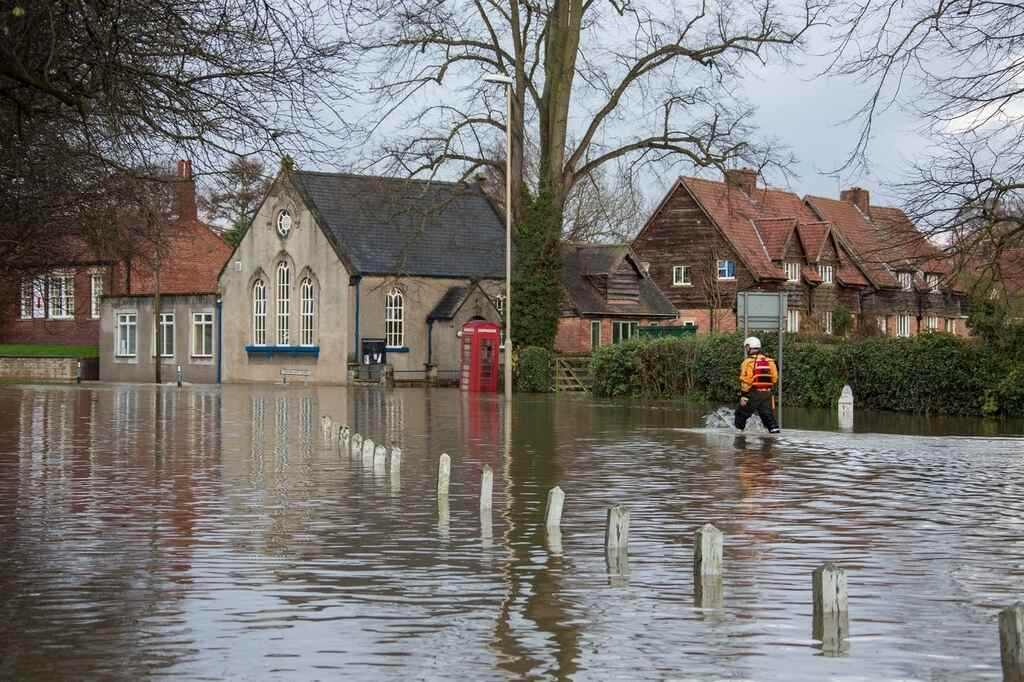
Flood‑Ready: Why Preparation and Insurance Matter
While many UK SMEs worry about fire or theft, flooding is actually one of the most destructive natural risks facing businesses. According to the Environment Agency, around one in six properties in England – including business premises – face some level of flood risk, yet only about 8 % of people in flood‑risk areas are fully aware of what that means for them.
Climate change is making this threat more severe: global temperatures have been rising by about 0.20 °C per decade since 1982, contributing to more frequent and intense rainfall, and sea levels are projected to rise by nearly three feet over the next century. During the particularly bad winter of 2015‑16, flood damage in England and Wales cost an estimated £1.3 – 1.9 billion, and business premises made up up to 50 % of properties seeking insurance payouts. The average cost of flood damage to a UK business is about £28 ,000 per incident, vastly exceeding the typical costs of fire or burglary.
In short, being unprepared for flood or water damage can be financially crippling. The good news is that effective planning can save between 20 % and 90 % of the cost of lost stock and equipment, and tailored insurance can help keep your business afloat when the worst happens.
Understand Your Flood Risk
- Check your risk and stay informed. Use the UK government’s flood risk tools to see if your premises are in a flood‑prone area. Even buildings far from rivers or the coast can flood when drains are overwhelmed. Sign up for the Environment Agency’s Flood Warning Service and the Met Office’s weather alerts to receive advance warnings of heavy rain or river flooding
- Know the warning levels. The Environment Agency issues three levels of warning: Flood Alert (flooding is possible – be prepared), Flood Warning (flooding is expected – immediate action required) and Severe Flood Warning (significant threat to life). When alerts are issued, act quickly – move critical items to higher ground, pack essential documents and medications, and be ready to evacuate.
- Trigger points and actions. Define when to act (e.g., water in the car park) and what steps to take at each stage.
- Evacuation and safety routes. Provide maps of safe exit routes and emergency meeting points.
- Shut‑off points. Clearly identify where to turn off gas, electricity and water.
- Asset protection. List equipment, stock and documents needing special protection and plan how to move them to safety.
- Data security. Store backups of customer and staff records in a flood‑proof location or in the cloud.
- Staff roles and contacts. Specify responsibilities, provide out‑of‑hours contact information and note staff who may need assistance. Designate a person or team responsible for managing flood emergencies.
- Prioritise safety. Ensure staff and customers are safe and know what to do. Avoid walking or driving through flood water – even 30 cm of fast‑flowing water can move a car.
- Move valuables and equipment. If it’s safe, relocate stock, IT equipment and important documents to higher floors or secure off‑site storage.
- Turn off utilities. Turn off gas, electricity and water supplies (don’t touch electrical switches if standing in water).
- Use flood defences. Fit flood boards, air‑brick covers and any other temporary barriers you have.
- Communicate. Notify suppliers, customers and insurers that your business premises may be affected.
- Contact your insurer immediately. Even if you don’t yet know the full extent of the damage, notifying your insurer quickly helps get claims moving.
- Document everything. Take photos and videos of damage to support your claim.
- Implement your business continuity plan. If your premises are unusable, look at alternative ways to operate (e.g., remote working).
- Prioritise wellbeing. Clean‑up can be stressful; follow public health advice when drying and cleaning the property and seek support if needed.
- Flood and water damage cover.
- Business interruption to protect lost income while you recover.
- Home emergency cover, which provides rapid assistance for burst pipes and other urgent repairs.
- Environment Agency – “What the public have taught me about flooding” (Gov.uk Blog) https://environmentagency.blog.gov.uk/2015/12/03/what-the-public-have-taught-me-about-flooding/
- Environment Agency – “Prepare your business for flooding” (GOV.UK) https://www.gov.uk/government/publications/preparing-your-business-for-flooding
- Environment Agency – Business Flood Plan Checklists (GOV.UK) https://www.gov.uk/government/publications/preparing-your-business-for-flooding/business-flood-plan-checklists
- Environment Agency – “Adapting your home or business to the risk of flooding” (GOV.UK) https://www.gov.uk/guidance/adapting-your-home-or-business-to-the-risk-of-flooding
- Environment Agency – “Be Flood Prepared: Respond and Recover Quicker” https://consult.environment-agency.gov.uk/hnl/prepare-respond-recover/
- Superscript Business Insurance – “How to protect against flood damage” https://gosuperscript.com/news-and-resources/how-to-protect-your-business-against-flooding/
- SafeGroup – “The Cost of Flood Damage” https://thesafegroup.co.uk/blog/the-cost-of-flood-damage/
- Morgan Clark Loss Assessors – UK Flood Statistics & Facts https://www.morganclark.co.uk/about-us/blog/uk-flood-statistics-facts-about-flooding/
- RiskSTOP – Instant Risk Guidance: “What happens when a flood hits your business?” (YouTube) https://www.youtube.com/watch?v=INKNW0DXEt4

Get a Quote Now
Get a Quote
All Categories
Recent Posts


Smart Admin0 Comments
Employers’ Liability Insurance: Why UK Businesses Could Face a £2,500 Daily Fine

Smart Admin0 Comments
